Herons and Fisheries: Understanding Conflict and Practical Solutions
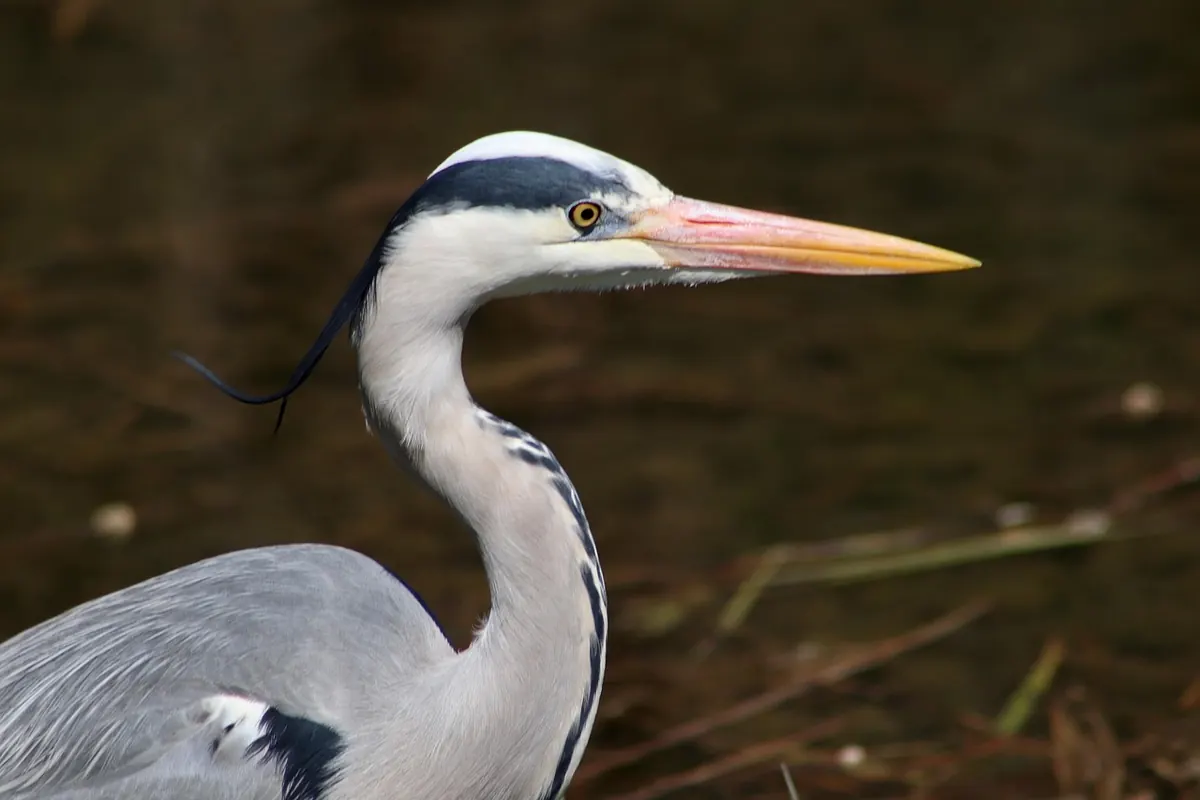
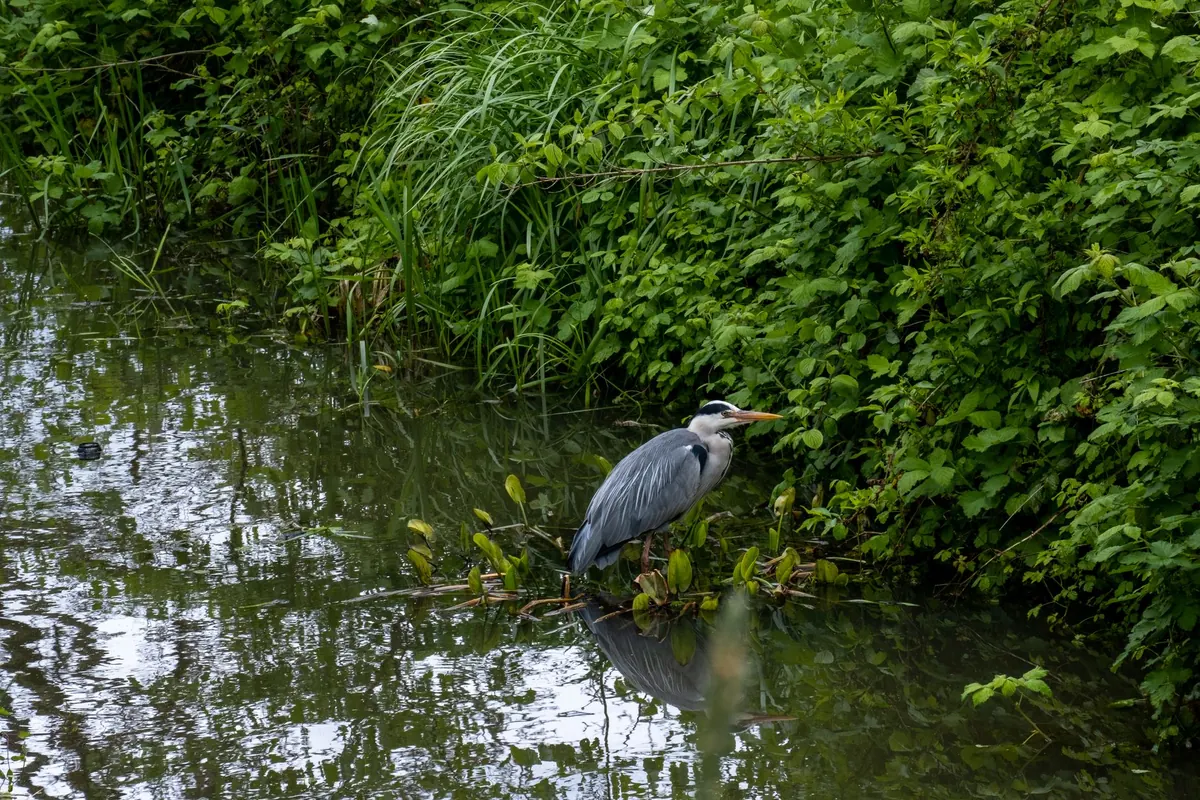
It is a sight that stops you mid-step. A grey heron, motionless at the edge of the pond, neck folded, one eye on the water — then the strike, so quick you half-wonder whether you imagined it. For most birdwatchers that moment is a gift. For anyone who has spent years raising koi, or who manages a small stillwater, it can be an expensive one.
Herons and fish can share a neighbourhood. Getting there means understanding what draws the bird in, knowing where the law stands, and choosing deterrents that work rather than merely look reassuring. It also means accepting an uncomfortable truth: a heron is not doing anything wrong. It is simply being extremely good at what evolution built it to do, in a place where humans have thoughtfully removed all the difficulty.
Why a stocked pond looks like an invitation
Herons are opportunists. In the wild they work hard for every meal: fish are scattered, wary, and often hidden in deep or weedy water. A stocked pond removes most of that difficulty at once. The water is often clearer, the fish slower and more brightly coloured than anything wild, and the margins shallow — exactly the depth a heron's legs and bill are built for. Add a fence post, a shed roof or a low branch to stand on, and you have a textbook feeding station.
Grey herons are also patient in a way few predators manage. A bird may stand motionless for twenty minutes before it strikes, and it will return to a spot where it has succeeded before. Dawn and dusk are peak hours, and the pressure rises in the breeding season, when adults are feeding chicks as well as themselves. That is why a pond can go untouched for years and then suddenly attract daily visits. Nothing about the pond changed. A heron found it.
The vulnerability of a pond is largely a matter of design. Shallow shelves, clear water, bare margins and a good vantage point all add up. So does the size and behaviour of the fish: ornamental koi and goldfish are large, slow, conspicuous and unaccustomed to being hunted. They are, from a heron's point of view, close to ideal. A heron feeding young may visit several times a day, and a single bird can do a great deal of damage in a fortnight.
Reading the signs before you blame the heron
Fish vanish for many reasons, and reaching for the netting before you know the cause is a good way to spend money on the wrong problem. Herons usually leave remarkably little evidence. They swallow fish whole, head first, then fly off to digest somewhere quiet, which means the classic signature is not a carcass on the lawn but an absence — large fish simply gone, with nothing to show for it.
Look instead for the quieter clues:
- Footprints in soft mud or on a wet timber edge: large, long-toed prints, quite unlike a duck's webbed foot.
- Whitewash: herons produce copious white droppings, often streaked down one side of a favourite perch or post.
- Feathers — occasionally a small grey or white feather caught on a plant.
- Timing: losses noticed in the morning, or a bird seen standing in the same spot at the same hour.
- Wounded survivors: fish with puncture marks or ragged gashes, usually the result of a strike that missed.
Other predators leave a different trail. Otters typically leave partially eaten fish, often with the head or shoulders taken, along with spraint on flat stones or grass. Mink kill far more than they eat and leave multiple carcasses with bites at the head or neck. Cats usually leave the fish out of the water, sometimes with the head removed. Raccoons, where they occur, are messy and will tip planters and knock over pots. When nothing at all is found, a bird is the likeliest answer.
It is also worth ruling out causes that have nothing to do with predators. Water quality crashes, low oxygen on a hot still night, disease, spawning losses, a failed pump, a blanketweed bloom and even theft can all empty a pond of fish with no bodies to show for it. If the survivors are gasping at the surface or listless, the heron is a red herring.
Where the law stands
This matters, because the instinctive response — "can I just get rid of it?" — is not available. In the United Kingdom, grey herons are wild birds protected under the Wildlife and Countryside Act 1981. It is an offence to intentionally kill, injure or take one, or to damage its nest or eggs. There is no general licence permitting herons to be killed for fishery protection, and individual licences are rarely granted; applicants are expected to demonstrate serious damage and to have exhausted non-lethal methods first.
The pattern is similar elsewhere. In the United States, herons are protected under the Migratory Bird Treaty Act, and taking one requires a federal permit that is seldom issued for pond depredation. Many other countries extend comparable protection to native fish-eating birds. Where a licence does exist, it usually comes with conditions, reporting requirements and a strong preference for other solutions.
There is an odd comfort in the law here. It draws a firm line: you are free to make your fish difficult to catch, but not to make the bird pay for catching them.
In practice this pushes you towards the methods that work best anyway. Killing a resident heron does not solve the problem: the territory is attractive, and another bird will usually move in. Making the pond genuinely hard to fish does solve it, because it changes the calculation for every heron that might visit.
Deterrents that actually work
No single device is reliable on its own, because herons habituate quickly. The keepers who lose the fewest fish use layers: a barrier, a pond that offers no easy meal, and a couple of unpredictability factors. Build the defence as though a heron is already watching.
Physical barriers: nets, wires and frames
This is the only approach that reliably works. A taut net stretched on posts at least 60cm above the water, angled outward so birds cannot land on the edge, will defeat almost any heron. Choose a mesh small enough that a bird cannot push its head through — no more than 50mm — and keep it taut. A sagging net is a trap that can drown or tangle birds, so check it after storms, snow and strong winds. Rigid mesh panels or a walk-in fruit cage are neater options for small formal ponds.
Overhead monofilament lines are the discreet alternative. Strung 30–45cm above the water surface and spaced roughly 30–50cm apart, they break up the airspace herons need to land and take off, and are almost invisible from the house. They are cheap, quick to install, and kind to everything else that visits.
Making the water harder to fish
Habitat design does a great deal of quiet work. Herons hunt best in water up to about knee height — roughly 30–40cm — so straight-sided margins of 60cm or more remove the wading shelf they prefer. Submerged pipe refuges, clumps of oxygenating plants, floating vegetation and overhanging marginals all give fish somewhere to retreat, and koi quickly learn to use them. Feeding fish in the deepest part of the pond at a regular time also concentrates them where a heron cannot easily reach.
Decoys, scarers and repellents
Plastic heron decoys are the most widely sold deterrent and among the least effective: herons are not strongly territorial at feeding sites, and many birds simply ignore them. Owl statues, scarecrows and flashing CDs suffer the same fate within days. Motion-activated water sprays do better, particularly on a pond that is only occasionally visited, and an active dog is more effective than any gadget. Ultrasonic devices have little credible evidence behind them, and taste repellents are impractical in a pond containing fish you want to keep. Vary whatever you use, and do not rely on any of it alone.
A practical plan for a single pond
- Confirm the cause. Watch at dawn and dusk for a week and note what you see, along with any tracks or droppings.
- Keep a simple record. Date, number and size of fish lost, and anything found — it will tell you whether your measures are working.
- Remove perches. Take out low branches, move bins, and discourage the bird from standing within sight of the water.
- Fix the shallows. Deepen or cover any easy wading shelf, ideally to 60cm or more.
- Install overhead lines first. They are the cheapest, quickest and least intrusive option.
- Net if losses continue. Taut, raised, angled, and checked often.
- Give the fish cover. Pipes, plants and a deep refuge zone where they can disappear.
- Guard the peak hours. A dog in the garden, or a motion-triggered spray, adds risk at dawn and dusk.
- Never improvise with a trapped bird. If a heron tangles in netting, contact a wildlife rescue rather than trying to free it yourself.
Living with herons
With good design, most gardens reach a workable truce. Many koi keepers run heron-proof ponds and still enjoy the occasional visitor, because the bird quickly learns there is no easy meal to be had and moves on. Others accept a small, occasional loss as the price of a pond that looks like water rather than a cage — a reasonable choice, provided it is a choice and not a surprise.
The most useful shift is the one in the opening scene. A heron at your pond is not a disaster arriving; it is evidence that you have built something genuinely alive. The aim is not to keep the bird away forever, but to make sure that when it stands there, patient and grey in the early light, it eventually decides that this particular stretch of water is not worth the wait.
Photo: Nennieinszweidrei / Pixabay